

What to Do If Hand-Sewn Weft Extensions Shed or Tangle

Hand-sewn weft extensions are known for their seamless blend and natural appearance—but when they start shedding or tangling, maintaining that flawless look becomes a challenge. Whether you’re noticing strands falling out, stubborn knots forming, or a loss of volume, it’s important to understand what’s causing the issue and how to respond.
This guide will walk you through the most common reasons behind shedding and tangling, offer expert tips for prevention and care, and help you decide when it’s time to schedule a professional maintenance visit. With the right techniques and routine, you can keep your extensions smooth, strong, and beautiful for weeks to come.
Key Takeaways
- Shedding happens when wefts are stressed, unsealed, or affected by product buildup.
- Using a proper brush and gentle technique prevents breakage at the weft line.
- Sulfate-free products help maintain moisture without damaging sealants.
- Tangling is caused by friction, improper washing, or sleeping with damp hair.
- Nighttime protection, like braiding or silk wraps, can prevent matting.
- Regular visits to a stylist ensure wefts stay secure and healthy.
What Causes Shedding in Hand-Sewn Weft Extensions?

Shedding is the loss of individual hairs from the weft, weakening the overall bond and reducing density. Excessive shedding happens when physical stress or product issues loosen strands, compromising the smooth appearance and durability of Remy human hair extensions.
How Does Improper Brushing Lead to Shedding?
- Using a fine-tooth comb instead of a wide-tooth or extension brush pulls at delicate weft threads.
- Brushing from roots instead of working from ends to base creates tension at the weft line.
- Applying too much pressure tangles strands, increasing breakage along the weft edge.
The Science of Hair Structure and Damage
Hair extensions, particularly those made of human hair, are susceptible to damage from various factors, including improper brushing, heat styling, and chemical treatments. These factors can compromise the hair's cuticle, leading to increased shedding and tangling. Understanding the structure of hair and how these external factors affect it is crucial for maintaining the integrity of extensions.
Why Does Lack of Weft Sealing Increase Shedding?
- Unsealed wefts allow hair movement that stresses the stitched base.
- Fabric glue or weft sealer fills stitch perforations, preventing strands from slipping out.
- Regular resealing after washing re-protects the weft and maintains strand integrity.
Can Product Buildup Cause Excessive Shedding?
- Silicone-based serums leave a film that interferes with sealants.
- Mineral oil in some leave-ins breaks down weft glue over time.
- Clarifying shampoo once a month removes buildup and restores sealing effectiveness.
The Impact of Hair Products on Hair Extensions
The use of certain hair products can significantly impact the longevity and appearance of hair extensions. Products containing silicones, mineral oils, and sulfates can lead to product buildup, which interferes with the sealant and weakens the bond of the extensions. Choosing the right products is essential for maintaining the health and appearance of the extensions.
How Does Hair Quality Affect Shedding?
- Remy human hair maintains cuticle direction, resisting tangles and loss.
- Non-Remy or heat-processed hair features rougher shafts that shed more.
- Investing in premium hand-sewn wefts enhances longevity and minimizes failure.
How Can You Prevent Shedding in Hand-Sewn Weft Extensions?

Preventing shedding means reinforcing the weft base and treating strands gently. A blend of expert sealing, proper brushing, and product selection promotes lasting wear and appearance.
What Are the Best Weft Sealing Techniques to Stop Shedding?
- Clean weft edges with alcohol-free spray.
- Apply a thin layer of weft sealer along stitch holes.
- Heat-activate the sealer with a low-heat flat iron for 5 seconds per inch.
- Let the weft air-dry for full bond before styling.
How Should You Brush Extensions to Minimize Shedding?
- Use a loop-style extension brush or wide-tooth comb designed for wefts.
- Start detangling at ends, then work upward in small sections.
- Hold the weft base firmly to prevent pulling on stitches.
Which Sulfate-Free Products Help Prevent Shedding?
| Product | Feature | Benefit |
|---|---|---|
| Sulfate-Free Shampoo | Gentle surfactants | Cleanses without stripping sealant |
| Hydrating Conditioner | Natural oils | Restores moisture for flexible strands |
| Weft Sealer Spray | Fabric-safe formula | Reinforces stitched edges |
When Should You Avoid Heat and Chemicals to Protect Extensions?
- Skip hot tools for at least 48 hours after installation.
- Avoid bleach, perm, or color services without professional advice.
- Use a heat protectant spray on strands when styling above 300°F.
Why Do Hand-Sewn Weft Extensions Tangle and Matt?

Tangling occurs when strands intertwine and form knots, while matting is a compact mass that resists regular brushing. Friction, moisture, and poor washing habits combine to create snarls at the weft line, reducing smoothness and shine.
How Does Sleeping with Wet Hair Cause Tangling?
- Moist strands cling and twist during night movements.
- Combined moisture and pressure on pillows create tight knots.
- Air-dry or braid hair loosely before bed to protect wefts overnight.
What Role Does Friction Play in Extension Tangling?
- Collar-neck friction at weft edges accelerates knot formation.
- Coarse towel drying roughs cuticles and creates friction points.
- Switch to a soft microfiber towel or gentle pat-dry method.
How Does Improper Washing Contribute to Tangling?
- Rubbing the weft line creates friction that snarls adjacent strands.
- Massaging shampoo from mid-shaft to ends protects the base.
- Rinsing thoroughly prevents residue that can cement strands together.
Why Does Lack of Regular Detangling Cause Matting?
- Weekly detangling removes minor tangles before they form mats.
- Using a leave-in detangler with slip reduces breakage.
- Consistent maintenance prevents dense, unmanageable mats.
What Are the Best Methods to Detangle and Resolve Tangling in Extensions?
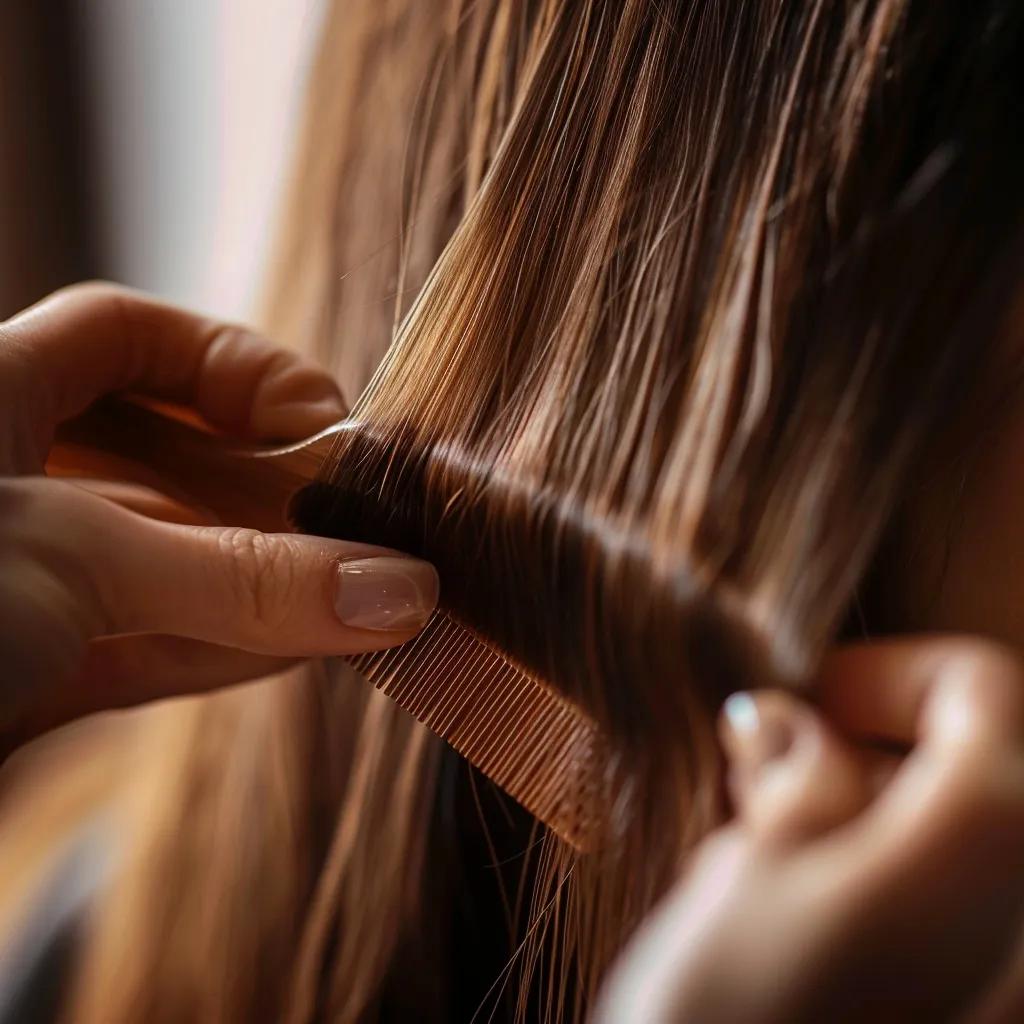
Safe detangling restores softness and reduces breakage when done correctly. A blend of protective products and gentle techniques untangles knots without harming the weft base.
How Do You Use Detangling Spray and Leave-In Conditioner Effectively?
- Section hair into two-inch strands for targeted application.
- Mist detangling spray from mid-length to ends, avoiding the weft root.
- Work leave-in conditioner into ends, then comb through each section.
What Is the Proper Washing Technique for Hand-Sewn Wefts?
- Rinse with lukewarm water until fully wet.
- Apply a small amount of sulfate-free shampoo, focusing on mid-shaft and ends.
- Rinse thoroughly, then distribute conditioner from ends up without massaging the weft.
- Gently squeeze out excess water and pat dry with a microfiber towel.
How Can Nighttime Care Prevent Tangling?
- Loosely braid hair or wrap it in a silk scarf before sleep.
- Use a silk or satin pillowcase to reduce fabric friction.
- Avoid tight ponytails or buns that stress the weft.
When Should You See a Professional Stylist for Extension Maintenance?

Regular salon visits extend the life of hand-sewn wefts by keeping them secure and healthy. A stylist’s expertise can correct issues before they escalate into shedding or matting.
What Are Signs Your Extensions Need Professional Move-Ups?
- Visible weft roots more than half an inch from the scalp.
- New natural hair growth creating gaps and tension at the stitch line.
- Loosened or slipping weft bands causing uneven volume.
How Does Professional Maintenance Extend Extension Lifespan?
- Re-sealing wefts with salon-grade sealant reinforces the base.
- Thorough detangling and conditioning prevent matting at the root.
- Precision installation corrects uneven sections and protects natural hair.
What Heat Styling Best Practices Do Stylists Recommend?
- Always apply a thermal protectant to strands before heat application.
- Use tools at temperatures below 350°F and on a low-to-medium heat setting.
- Limit heat sessions to once or twice per week to preserve sealant and hair vitality.
Consistent care routines and informed maintenance decisions keep hand-sewn weft extensions lush, tangle-free, and long-lasting. By understanding the causes of shedding and tangling, applying precise prevention techniques, and seeking professional touch-ups at the right time, wearers can enjoy a flawless, natural blend every day. Partnering with experienced stylists and quality extension providers ensures that each step supports optimum extension health and beauty.
Frequently Asked Questions
What are the best practices for storing hand-sewn weft extensions when not in use?
Store your extensions in a clean, dry place away from heat and sunlight. Use a silk or satin storage bag to reduce friction. Always make sure your extensions are clean and fully dry before storing them flat or hanging to prevent mold, tangling, or damage.
How often should I wash my hand-sewn weft extensions?
Most weft extensions only need to be washed every 2 to 4 weeks, depending on how often you use products or sweat. Over-washing can dry out the hair. Always use sulfate-free shampoos and conditioners to protect the seal and softness of the hair.
Can I color my hand-sewn weft extensions at home?
It’s best to have coloring done by a professional. Remy human hair can be dyed, but incorrect products or methods can damage the strands or cause uneven color. If you do color at home, do a strand test first and avoid harsh chemicals.
What should I do if my extensions start to smell?
Wash them thoroughly with a gentle, sulfate-free shampoo and rinse well. Let them air dry completely. If the smell persists, use a clarifying shampoo monthly to remove buildup. Proper drying and storage will prevent recurring odors.
How can I tell if my extensions are high quality?
High-quality extensions are usually 100% Remy human hair. They feel soft, have a natural shine, shed very little, and don’t tangle easily. Check for consistent texture and cuticle alignment. Trusted brands will usually provide sourcing info and quality assurances.
When is it time to replace my hand-sewn weft extensions?
If your extensions show constant shedding, tangling that can’t be brushed out, or a noticeable loss of volume and shine, they may be worn out. Visible damage to the weft or poor blending with your natural hair are also signs it’s time for a replacement.
Conclusion
Keeping your hand-sewn weft extensions looking beautiful takes more than just good looks—it requires consistent care, smart product choices, and regular maintenance. By understanding the root causes of shedding and tangling, and following proven techniques for brushing, washing, and nighttime care, you can protect your investment and enjoy flawless results day after day.
If you’re unsure whether your extensions need professional attention, trust your instincts—and your stylist. With the right tools and expert guidance, your extensions can remain smooth, tangle-free, and full of life for the long haul.